
Stage 01 · Chongqing
The vertical city
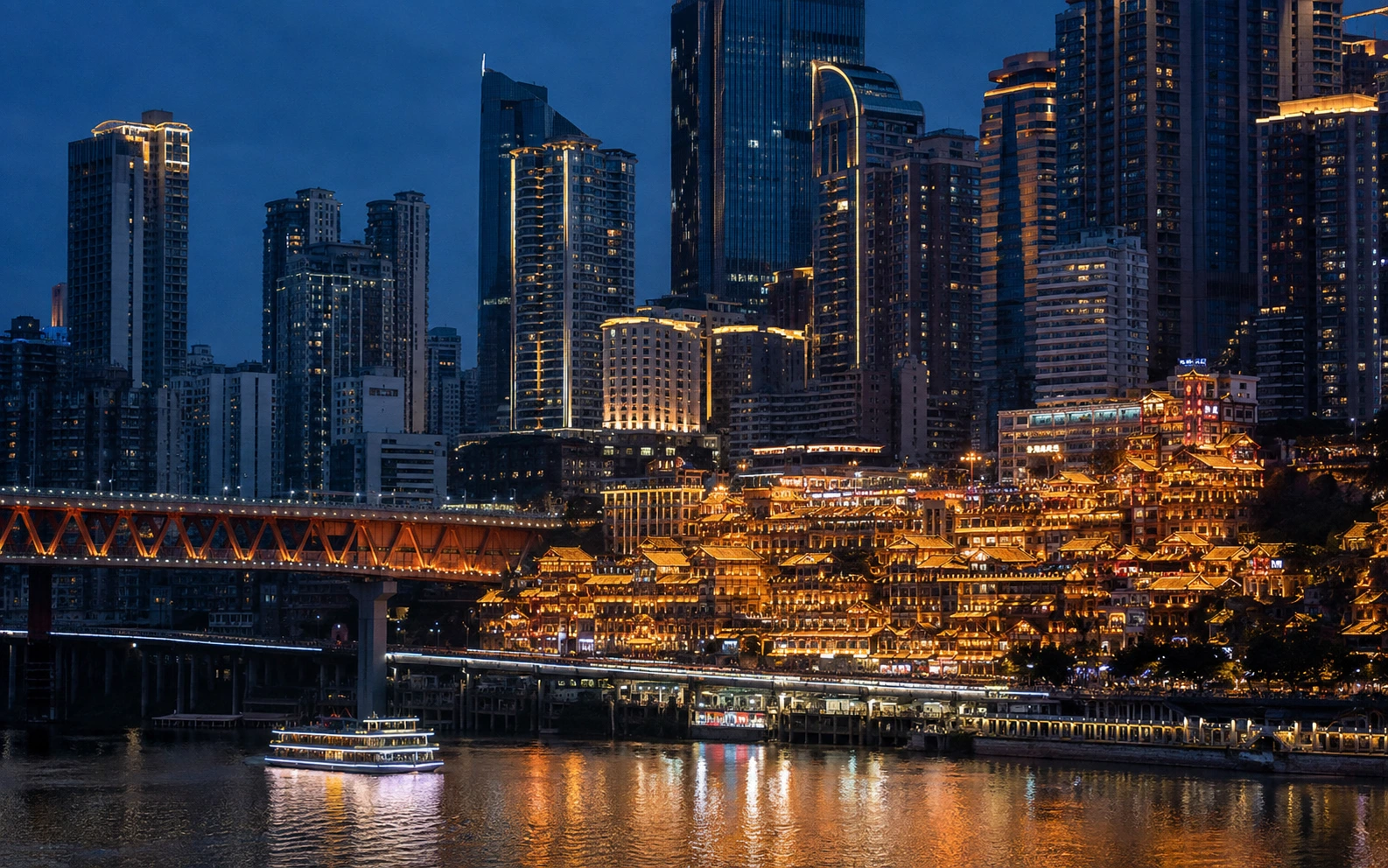
Monorails, steep streets, river crossings and layered neighborhoods make movement through Chongqing part of the experience itself.
Chongqing · Wuhan
Contrast Chongqing's vertical mountain-city energy with Wuhan's broad Yangtze riverfront, moving through hot pot, karst landscapes, immersive urban transport and Jingchu culture.
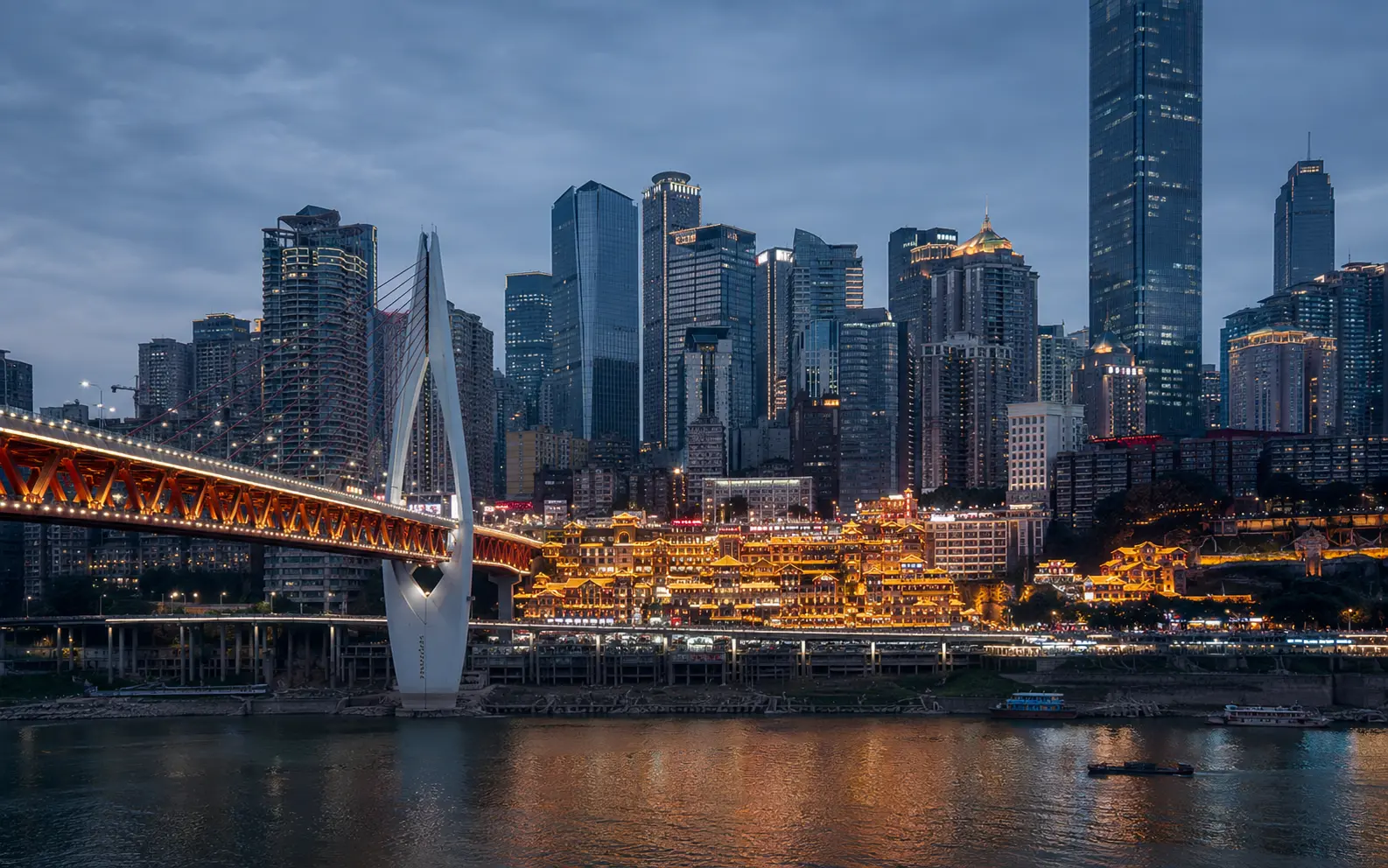 Chongqing · Vertical city
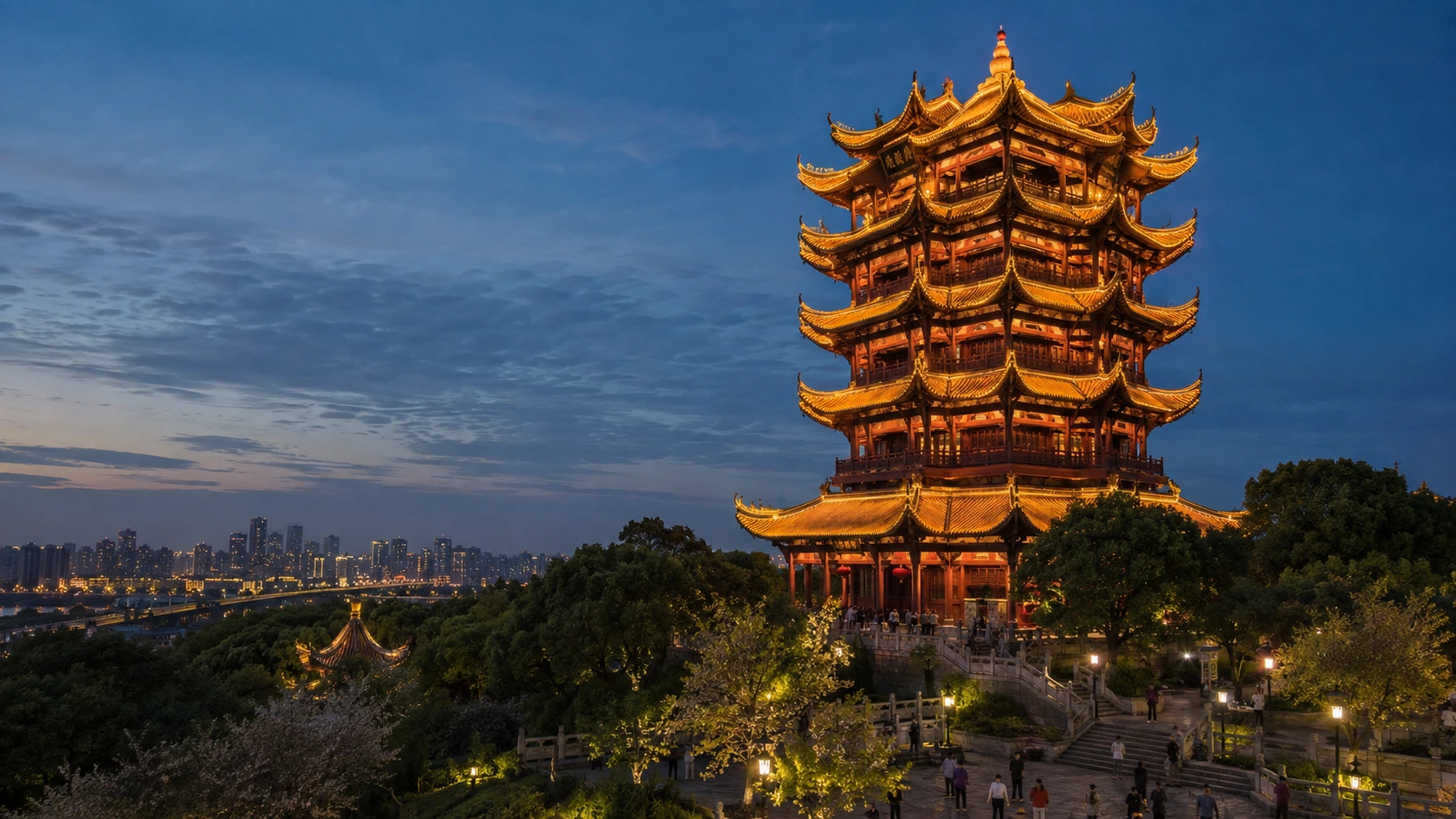 Wuhan · Yellow Crane Tower
01
The journey
A Tale of Two Cities is a seven-day journey linking Chongqing and Wuhan. The first half moves through one of China's most dramatic urban landscapes, from Jiefangbei and Hongyadong to Liziba, Ciqikou, Shancheng Alley and the mountains of Wulong.
The second half shifts east to Wuhan, where Yellow Crane Tower, Hubei Provincial Museum, East Lake and historic Hankou reveal a different relationship with the Yangtze. Food, public transport and evening city life are woven into the route rather than treated as background.
Why you'll love it
Move from Chongqing's vertical cityscape into Wulong's karst landscape, then finish in Wuhan where museums, lakes and historic riverfront districts open another side of life along the Yangtze.
Stage 01 · Chongqing
Monorails, steep streets, river crossings and layered neighborhoods make movement through Chongqing part of the experience itself.
Stage 02 · Wulong
Natural stone bridges, sinkholes and deep green canyon walls create a full-day change of scale beyond the city.
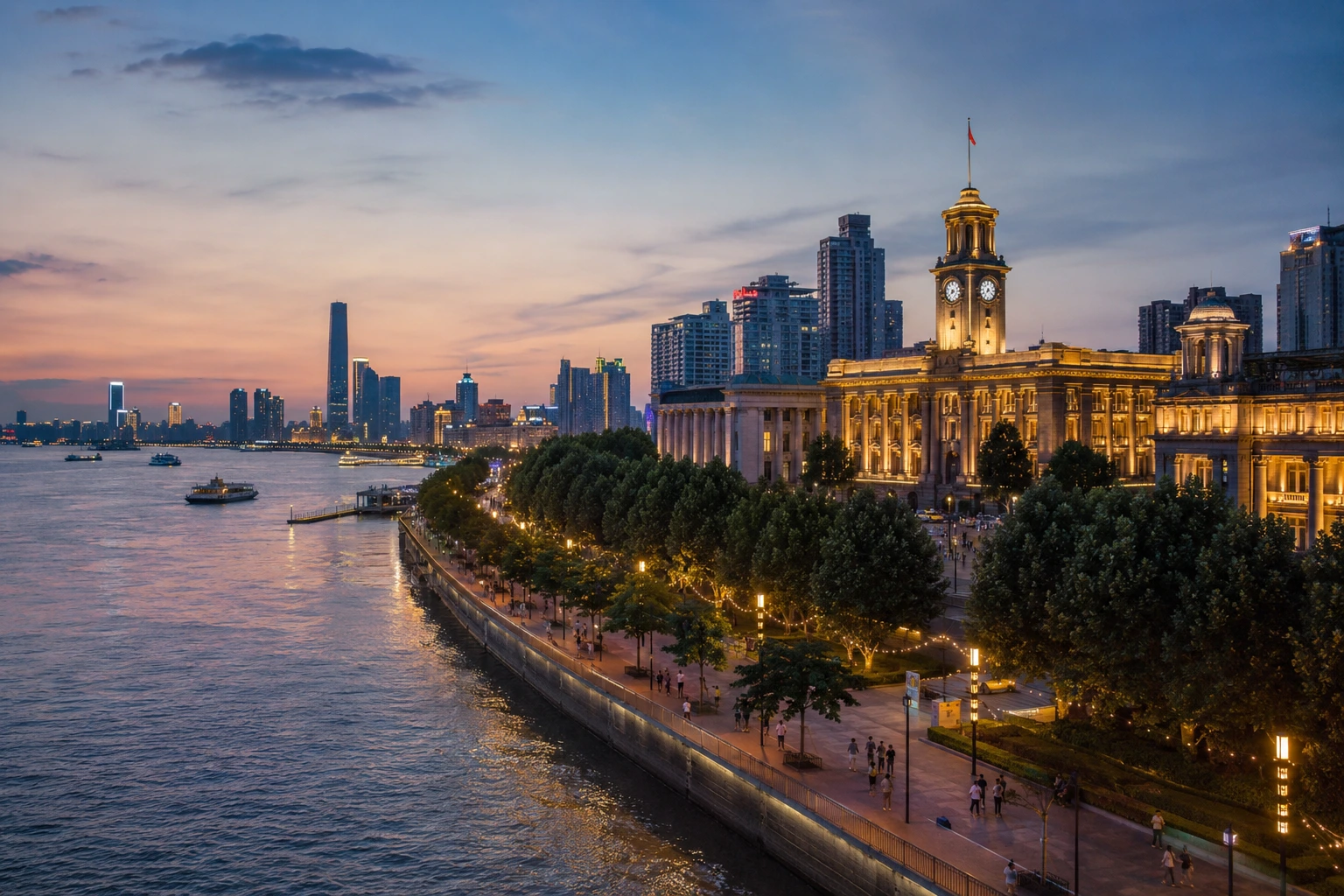
Stage 03 · Wuhan
Yellow Crane Tower, East Lake, Jingchu treasures and historic Hankou shift the journey into a broader, more open river-city rhythm.
Signature experiences
The strongest moments are highly physical and atmospheric: eating hot pot inside a historic shelter, moving through Chongqing's layered transport system, stepping into Wulong's karst landscape and encountering Jingchu culture in Wuhan.
Eat Chongqing hot pot inside a former air-raid shelter while watching Sichuan Opera face-changing.
See the Liziba monorail pass directly through a building, one of the clearest expressions of Chongqing's layered urban form.
Spend a full day inside a UNESCO-listed karst landscape of natural arches, sinkholes and canyon walls.
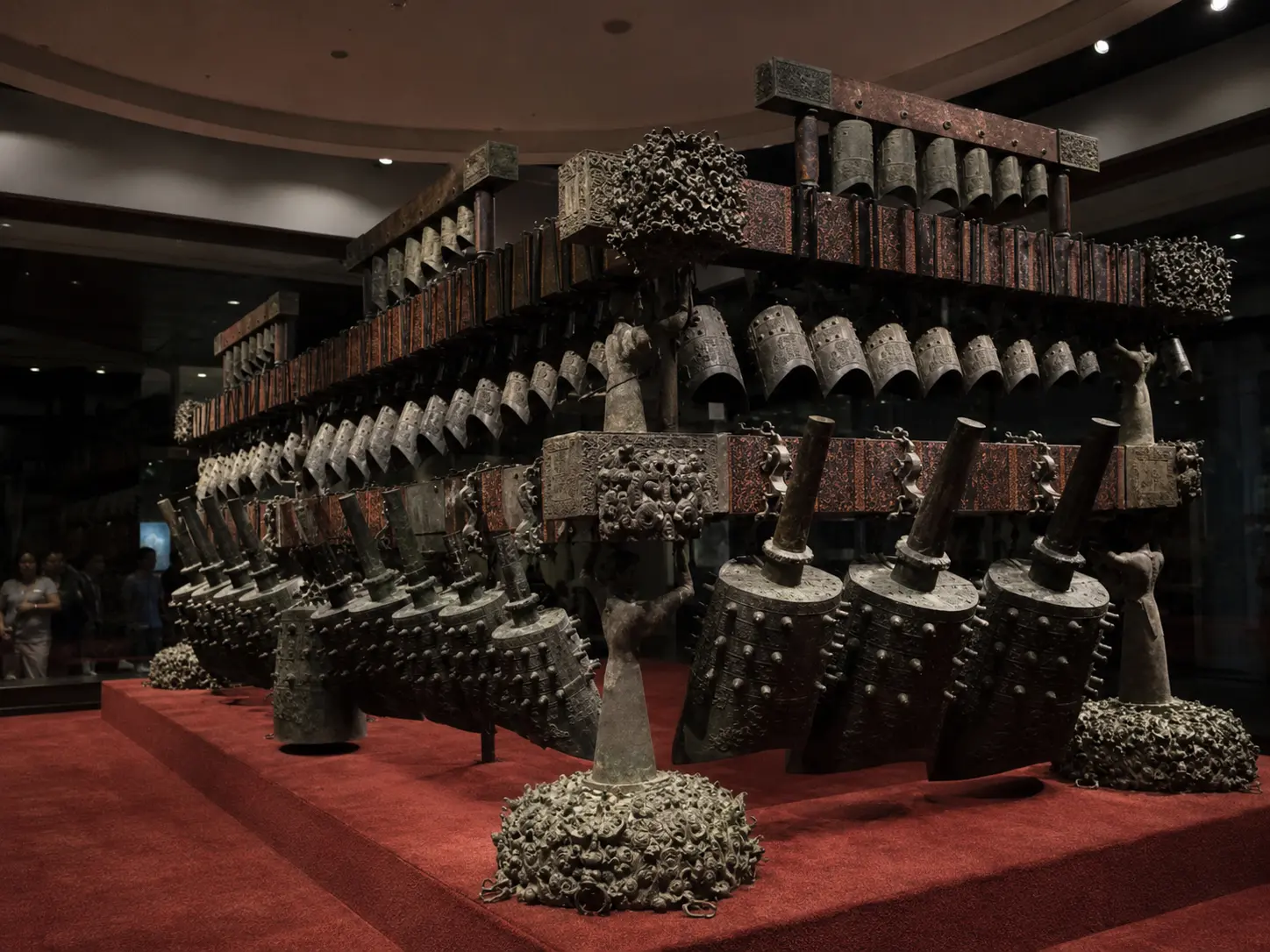
See the Zeng Hou Yi chime bells, Sword of Goujian and other major collections that place Wuhan inside a much older cultural story.
Route at a glance
The route spends the opening days in Chongqing, including a full-day excursion to Wulong, before crossing east to Wuhan for Jingchu culture, East Lake and historic Hankou.
Begin amid Jiefangbei and Hongyadong, move through Liziba, Ciqikou and Shancheng Alley, then leave the city for Wulong before one final Yangtze Cableway crossing.
Day by day
Open any day to see the detailed flow. The itinerary balances major city experiences with Wulong's landscape and a distinct cultural shift once the journey reaches Wuhan.
Arrive in Chongqing and settle into the city before heading toward the Jiefangbei commercial district. As evening falls, walk to Hongyadong to see the illuminated stilt-house complex rising above the riverfront.
Continue to Bayi Road Food Street for a first introduction to Chongqing snacks and the city's intense evening atmosphere.
Begin at Liziba to see Chongqing's monorail pass through a building, then continue to Ciqikou Ancient Town for Ba-Yu architecture, old wharf culture and traditional crafts such as twisted dough snacks and hot pot base preparation.
Return to Yuzhong District for Shancheng Alley. In the evening, enter one of Chongqing's former air-raid shelters for hot pot accompanied by a Sichuan Opera face-changing performance.
Spend the day at Wulong Tiansheng Three Bridges, one of Chongqing's most dramatic natural landscapes. Three monumental natural stone arches cross the canyon above a deep karst sinkhole system.
The route also passes the historic Tianfu Guan post station within the landscape, adding a human-scale cultural detail to the geological setting.
Begin the morning on Chongqing's Yangtze River Cableway, crossing above the river with views toward the Yuzhong Peninsula and Nan'an District. Continue onward to Wuhan by air or high-speed rail.
After hotel check-in and a short rest, visit Yellow Crane Tower at night, when projection, lighting and live performance transform the park into an evening cultural experience.
Visit Hubei Provincial Museum for major Jingchu collections including the Zeng Hou Yi chime bells and the Sword of Goujian. A chime-bell performance can add another dimension to the visit.
Spend the afternoon around East Lake Moshan, walking or cycling along the greenway or using sightseeing transport to experience Wuhan's lake landscape and Chu cultural setting.
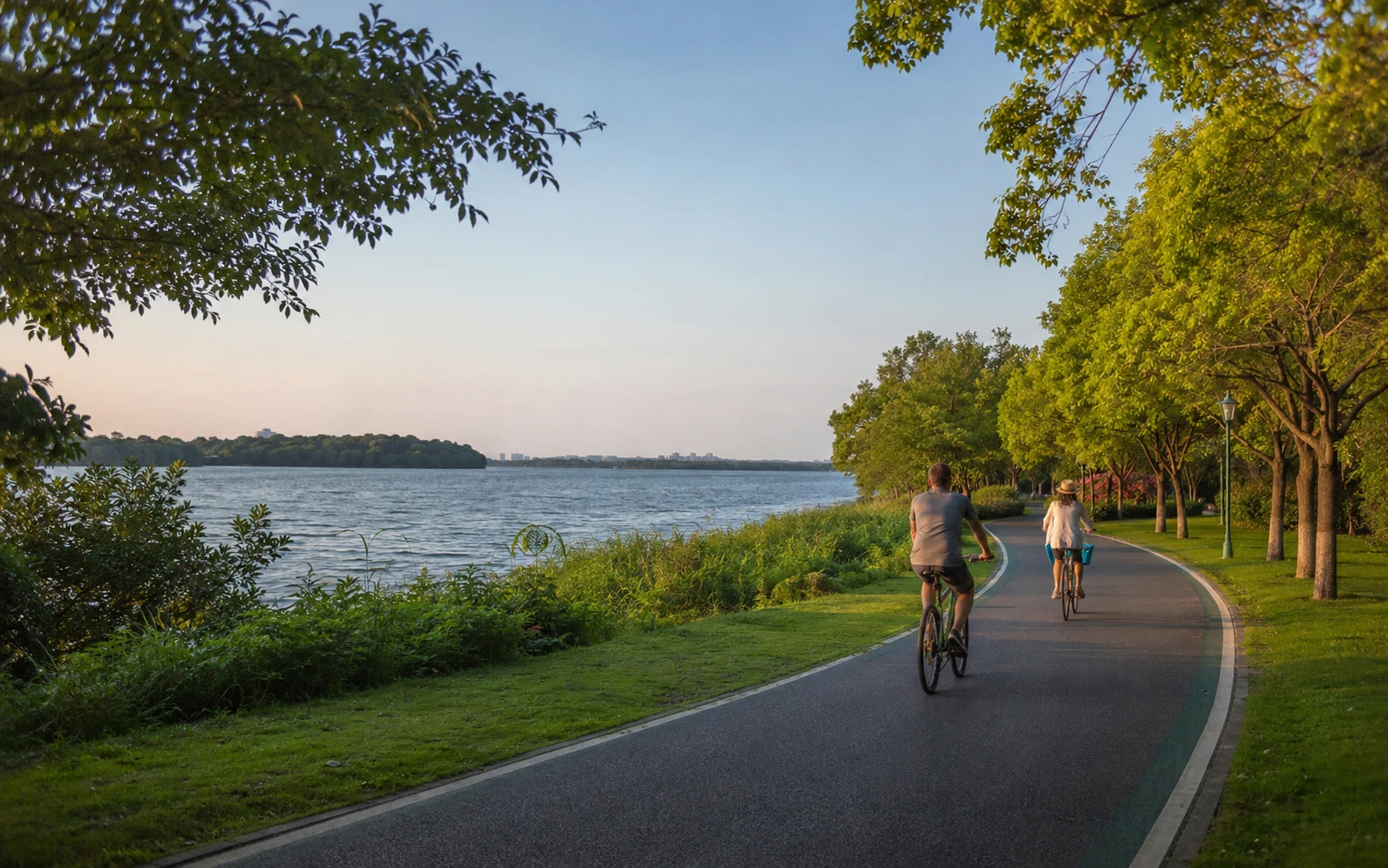 Wuhan · East Lake
Start with the Wuhan Guanggu Suspended Monorail, whose elevated route passes parks and archaeological landscapes through the city's eastern districts.
After lunch, shift into historic Hankou through Bagong House and Lihuangpi Road before walking toward Jianghan Customs House and Jianghan Road. The contrast between futuristic transport and early twentieth-century architecture is one of the day's defining ideas.
If you want to extend the evening, Zhiyin Hao can be added separately as an immersive floating theater experience on the Yangtze.
Keep the final morning light. Depending on your flight time, pick up regional souvenirs such as packaged hot dry noodles, Wuchang fish products or Qingzhu tea before your transfer to the airport.
Journey character
This route is strongly urban, but Wulong creates a deliberate day away from city density. Expect active sightseeing, public-space experiences, evening atmosphere and several visually distinctive transport systems.
Full city days are offset by a focused landscape excursion and a lighter final morning.
Expect city walking, uneven historic streets and extended movement through scenic areas.
The route can be adjusted around your preferred pace, transport choices and evening priorities.
Accommodation is shaped around your comfort and location preferences rather than one fixed public category.
Journey arrangements
The journey combines major sightseeing, distinctive transport and cultural experiences across Chongqing and Wuhan. Your final personalized proposal will state the exact service list for your dates and group.
Make it yours
Use the Chongqing and Wuhan route as the backbone, then adjust how much time you want to give food, nature, museums, nightlife or modern city experiences.
Give more time to local markets, neighborhood dining or additional hot pot experiences.
Slow down the Wulong day or create more breathing room around the karst landscape.
Include Wuhan's immersive floating theater experience as an additional evening if it suits your dates.
Accommodation and daily pacing can be tailored around how you prefer to travel.
Already have another China route in mind?
Use this journey as inspiration or start from scratch in Plan My Trip.
Your two-city journey
Share your dates, group size, pace, accommodation preferences and the experiences that matter most. The planning team will use the complete picture as the starting point for your personalized proposal.